A home is often the largest financial investment a person will make in their lifetime. Unlike other investments, a home is a complex system battling the elements, friction, and time. From the roof’s peak to the foundation’s depths, every component relies on the stability of the next. The primary challenge of homeownership is that small issues rarely remain small. A missing shingle can rot an entire roof deck; a tiny under-sink drip can destroy cabinetry and breed toxic mold; an unserviced heating system can fail on the coldest night, causing frozen pipes. Proactive maintenance is about safeguarding your home’s structural integrity, optimizing operational efficiency, and preventing costly emergencies.
Spotting Early Warning Signs from the Ground and Attic
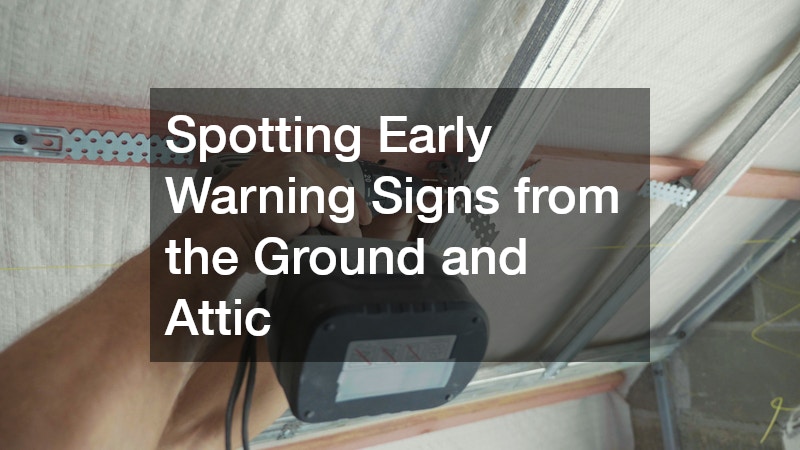
Homeowners should conduct a comprehensive visual roof inspection at least twice a year—typically in the spring and autumn. You do not need to climb onto the roof to perform the initial assessment; a pair of binoculars from the safety of the ground is highly effective.
- Shingle Degradation: Look closely for shingles that are buckling, curling at the edges, or entirely missing. Check the valleys of the roof, as these areas experience high water volume and are prone to premature wear.
- Granule Loss: Inspect your driveway and the ground beneath downspouts. A heavy accumulation of dark, sand-like granules indicates that asphalt shingles are losing their protective coating and nearing the end of their lifespan.
- Flashing Failures: Examine the metal flashing installed around chimneys, dormers, and vent pipes. If the flashing is rusted, warped, or separating from the structure, water will inevitably find its way underneath.
The exterior check only tells half the story. The truest indicator of roof health is found inside the attic. Grab a powerful flashlight after a heavy rainstorm and head upstairs. Look specifically for water staining or dark water tracks along the rafters and the underside of the roof sheathing. Inspect the insulation; if it is damp, matted, or smells musty, you have an active leak. Additionally, turn off your flashlight during the day and look up—if you see pinpoint beams of daylight peeking through the roof deck, water can enter through those exact spots.
Proactive Measures to Extend Shingle and Flashing Lifespan
Catching a vulnerability early allows you to execute localized roof repair before moisture invades the structural timber of your home. When shingles become loose or minor flashing seals fail, swift intervention prevents the wood beneath from rotting, which would otherwise require a complete, incredibly expensive tear-off.
While a handy homeowner can replace a single damaged asphalt shingle or apply roofing cement to a minor gap around a vent pipe, complex structural damage demands specialized expertise. Engaging professional roofing services ensuring that large-scale vulnerabilities—such as compromised underlayment, sagging roof decks, or widespread wind damage—are addressed using commercial-grade materials and proper safety rigging. Professional technicians can perform comprehensive structural audits that identify microscopic leaks invisible to the untrained eye, effectively doubling the operational lifespan of your existing roof through targeted maintenance.
Regular Channel Maintenance
The humble gutter and downspout system is your foundation’s primary bodyguard. When gutters become choked with autumn leaves, twigs, and pine needles, they fail completely. Water backs up, spills over the edges, and falls directly next to your foundation walls. Over time, this constant pooling erodes the soil, causing the foundation to settle unevenly, which manifests indoors as cracked drywall, stuck doors, and sloping floors.
To prevent this, clear your gutters at least twice a year, increasing to four times if your property is surrounded by overhanging trees.
- Safety First: Always use a sturdy extension ladder stabilizer to avoid crushing the gutters, and never work alone. Wear heavy leather gloves to protect your hands from sharp debris and hidden screws.
- The Cleanout Process: Use a narrow plastic scoop to remove the bulk of the organic matter, placing it directly into a bucket rather than dropping it onto the landscaping below.
- Flushing the System: Once the troughs are free of debris, insert a garden hose with a high-pressure nozzle into the high end of the gutter run. Flush the system thoroughly to wash away fine silt and verify that the downspouts are flowing freely. If water backs up in the downspout, you have a vertical clog that must be cleared by running a plumber’s snake down the tube or dismantling the elbow joints.
Structural Fixes for Sagging and Leaking Channels
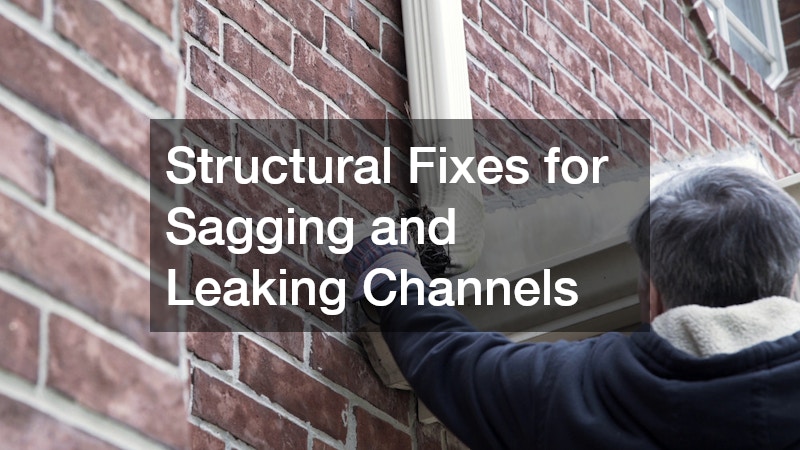
Clearing debris is only half the battle; the drainage system’s structure must align perfectly. Gutters need a slight downward slope toward the downspouts to prevent standing water. The standard is a 1/4-inch drop for every 10 feet of gutter. If the slope is wrong, water will pool, causing the metal to sag and pull away from the fascia board.
If you notice standing water in a clean gutter, adjust the pitch by unscrewing the support hangers, elevating the sagging section to the proper slope, and securing it with heavy-duty hidden gutter screws instead of nails, which pull out easily.
Leaking joints are another common issue. Clean the seam with a wire brush, let it dry, and apply a thick bead of exterior silicone waterproof sealant inside the joint. For widespread failures, warped troughs, or homes needing seamless upgrades, invest in professional gutter repair. Expert gutter services can install continuous, seamless aluminum systems made on-site to fit your home, eliminating joints and including advanced leaf guard technologies to reduce future maintenance.
Simple Monthly Habits for Peak System Efficiency
The single most critical maintenance task for any homeowner is also the simplest: changing the air filter. Air filters are not designed to clean the air in your home for your lungs; they are designed to protect the delicate internal components of the blower motor and evaporator coil from dust accumulation.
- Filter Frequency: Inspect your air filter every 30 days. If you have pets or allergy sufferers, replace it monthly. At a minimum, never let a filter sit longer than 90 days. A clogged filter forces the system to work twice as hard to push air, skyrocketing your utility bills and causing the system to overheat or freeze up.
- Choosing the Right MERV Rating: Pay attention to the Minimum Efficiency Reporting Value (MERV). Most residential systems are designed for filters rated between MERV 8 and MERV 11. Avoid ultra-high MERV filters (MERV 13+) unless your system’s blower motor is specifically rated for them, as they can restrict airflow just as severely as a dirty filter.
Beyond the indoor filter, the outdoor condenser unit requires physical breathing room. The outdoor unit dumps heat pulled from inside your home out into the atmosphere. If it is choked by weeds, overgrown shrubs, or stacked firewood, it cannot reject heat efficiently. Maintain a strict 2-foot clear perimeter around all sides of the outdoor unit, and gently spray the metal fins with a garden hose annually to wash away accumulated pollen, dirt, and lawn clippings.
Calibrating Complex Systems for Extreme Seasons
As seasons transition, your climate control infrastructure requires evaluation to handle peak thermal loads. Before the heat of summer arrives, maintenance on your cooling components prevents breakdowns. This includes clearing the air conditioning condensate drain line, verifying electrical connections, and ensuring correct refrigerant pressure. Professional air conditioning services ensure precise measurement of these elements with diagnostic tools.
Scheduling comprehensive HVAC repair services before winter is essential for safety and efficiency. Certified technicians can inspect the furnace heat exchanger for cracks, clean burner assemblies, verify draft ventilation, and ensure safety switches operate correctly. This oversight keeps your home safe from exhaust gases and maximizes energy efficiency throughout the year.
Defending Your Pipes Against Clogs and Pressure Spikes

Maintaining interior plumbing health requires a combination of pressure management and waste mindfulness. Many homeowners do not realize that excessively high municipal water pressure is a leading cause of failure requiring serious plumbing services.
- Testing Water Pressure: Purchase a simple, inexpensive water pressure gauge that screws onto any exterior hose bib. Test your pressure; it should read between 40 and 60 PSI (pounds per square inch). If your pressure exceeds 80 PSI, it puts extreme stress on pipe joints, washing machine hoses, and fixture valves. You must install or replace a water pressure reducing valve (PRV) at your main water shut-off location to protect your infrastructure.
- The Danger of Chemical Drain Cleaners: When a drain slows down, avoid pouring liquid chemical drain cleaners down the pipe. These harsh chemicals are highly caustic; they generate intense heat and chemical reactions that can warp PVC pipes and corrode old cast iron lines, leading to catastrophic leaks inside walls. Instead, utilize a mechanical drain snake, a hand auger, or natural enzymatic cleaners that break down organic blockages safely without destroying your pipe walls.
Resolving Hidden Leaks and Fixture Failures
Every homeowner should know basic plumbing repairs to address minor issues before they escalate. For instance, a running toilet can waste hundreds of gallons of water daily due to a degraded rubber flapper valve or an improperly adjusted fill valve, both fixable in fifteen minutes with basic tools. Similarly, replacing a worn-out rubber O-ring or ceramic cartridge in a dripping faucet prevents water stains.
To catch unseen leaks, perform a water meter test. Turn off all water-consuming appliances and fixtures. Check your main water meter’s low-flow indicator (a small red or blue triangle or a digital wheel). If it moves with no water usage, there’s a hidden leak. Finding these issues often requires advanced diagnostics. Hiring professional plumbers, who use specialized tools like thermal imaging cameras, acoustic leak detectors, and pipe-inspection cameras, can accurately locate hidden pipe failures, allowing for targeted repairs with minimal damage.
Extending the Lifespan of Core Kitchen and Laundry Machines
Major appliances are engineered to last a decade or more, but only if they receive basic routine maintenance.
- Refrigerator Coil Maintenance: The condenser coils on your refrigerator reject heat to keep the interior cold. These coils, located either at the bottom behind a kickplate or on the back of the unit, act like a magnet for dust and pet hair. Vacuum them thoroughly with a brush attachment every six months. Clean coils allow the compressor to run cooler and consume less electricity, adding years to the refrigerator’s life.
- The Dollar Bill Gasket Test: Inspect the rubber door seals (gaskets) on your refrigerator and freezer. Close the door on a dollar bill; if you can pull the bill out easily without any resistance, your seal is loose, allowing cold air to escape. Clean the gasket with warm, soapy water, or replace it entirely to restore an airtight seal.
- Laundry Room Safety: Clean your dryer vent line from the back of the machine to the exterior wall vent at least once a year. Accumulated lint blocks airflow, forcing the dryer to run longer, destroying clothing fibers, and creating a severe home fire hazard. For front-loading washing machines, leave the door completely open between cycles to allow the rubber boot to dry, preventing the growth of foul-smelling mold and mildew.
Maintaining Heavy Moving Structural Openings

When large appliances experience electrical or mechanical failures, deciding between DIY troubleshooting and professional intervention is critical. Complex electronic control boards, faulty compressor pumps, or broken heating elements often warrant specialized appliance repairs to ensure the work is done safely and complies with factory warranties. Attempting to rewire complex machinery without proper training can ruin the appliance or cause electrical shorts in your home’s breaker panel.
Beyond kitchen machinery, the single largest moving component of your home’s structure is the garage door. Because of its sheer size and weight, its mechanical tracking system must be kept perfectly aligned and lubricated. Homeowners should spray a dedicated silicone or lithium-based garage door lubricant onto the rollers, hinges, and springs twice a year to reduce friction and strain on the automatic opener.
However, if the door is unbalanced, sags, or makes popping noises, it often points to a failing torsion spring. These springs operate under immense mechanical tension. Attempting a DIY garage door repair on a torsion spring is incredibly dangerous and can result in severe physical injury. This specific task must always be delegated to a trained technician who possesses the specialized winding bars and heavy-duty brackets required to safely recalibrate or replace the lifting system.
Maintaining a home’s vital functions requires a shift in mindset from reactive repair to proactive stewardship. By implementing structured, seasonal maintenance routines—such as clearing water channels, inspecting roof barriers, replacing filtration media, and tracking down hidden fluid leaks—you preserve your property’s structural equity and ensure a safe, efficient environment for your family. The cost of routine maintenance is a modest investment that yields immense dividends, shielding you from the stress and exorbitant expenses of emergency restorations. Treat your home as a cohesive, functioning system, and it will reward you with decades of reliable shelter, comfort, and financial security.
About the Author